Transformer Fire Protection System: Complete Guide for Safe Substation Operations
- February 25, 2026
Transformers are the backbone of any power system around us. Without them, electricity cannot move safely from one level to another. But there is one risk that many people underestimate, which is fire.
Transformers, especially oil-filled ones, carry a large quantity of insulating oil. If something goes wrong inside, the situation can escalate quickly. That is why a proper transformer fire protection system becomes a necessity.
What Is a Transformer Fire Protection System?
A transformer fire protection system is a safety arrangement designed to detect and control fire in and around a transformer. Since oil is used for cooling and insulation, any electrical fault or overheating can create a dangerous situation.
Why Is Fire Protection Essential for Transformers?
Oil-filled transformers contain thousands of litres of mineral oil used for cooling and insulation. This oil is highly flammable. If an internal fault, such as insulation failure, short circuit, or arcing, occurs, the oil can ignite within seconds and rapidly escalate into a major fire.
A typical 117/15.2 kV, 37/50/62.5 MVA power transformer can contain approximately 37,000 litres of insulating oil. Larger transformers may contain even more. In the event of failure, the transformer itself can act as both the ignition source and the fuel for the fire.
One transformer fire can result in severe financial loss, damage nearby panels and cables, and disrupt power supply to entire areas. In substations and industrial facilities, the impact can be significant in terms of downtime, safety risks, and environmental damage.
Common Causes of Transformer Fires
Fire in a transformer system is very common in India. Here are the most common reasons:
Electrical faults: Short circuits, insulation breakdown, and internal arcing generate intense heat.
Mechanical failures: Tank rupture, bushing failure, or damaged cable terminations may lead to oil leakage, which increases fire risk.
External factors: Lightning strikes, severe weather, and overloading put extra stress on transformers and can trigger faults.
How Does a Transformer Fire Protection System Work?
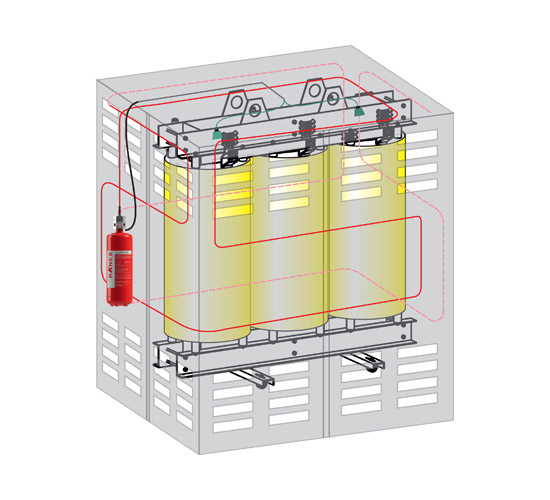
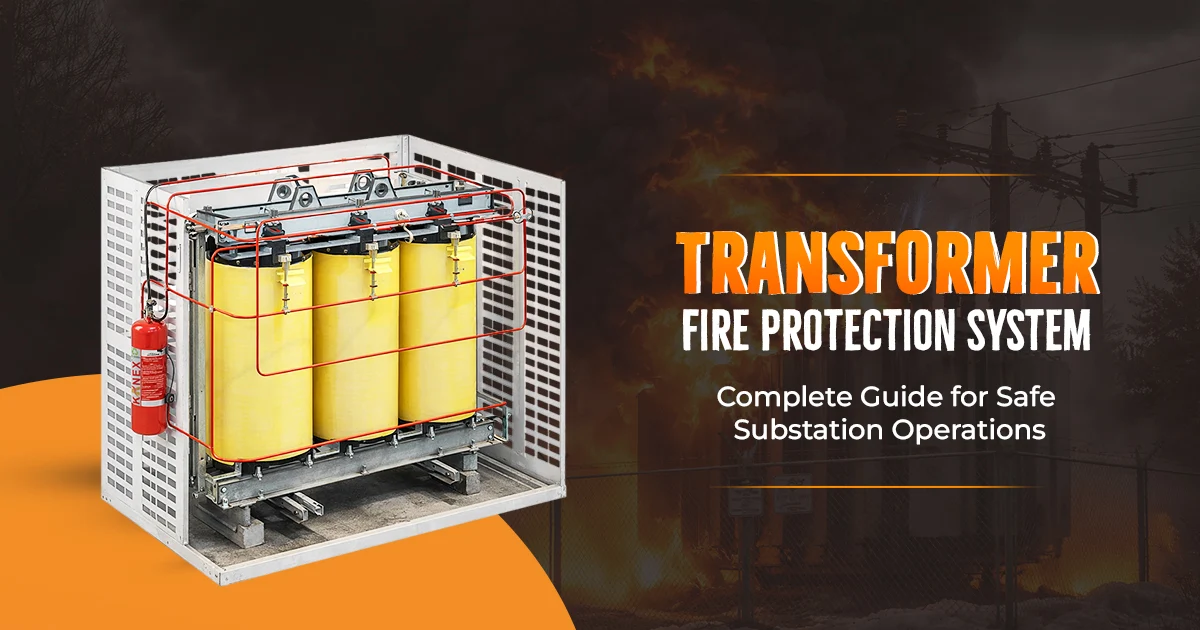
The fire protection system for the transformer is automatic. You don’t need to manually operate fire extinguishers during the emergency. The system works in stages, like:
Detection
The system uses a specially designed heat-sensitive pneumatic polymer tubing installed inside the transformer enclosure. This continuous linear detection tube monitors temperature along its entire length.
Activation
When the surrounding temperature reaches approximately 110°C, the pressurized detection tube bursts at the hottest point. This ensures the system activates exactly where the fire starts.
Suppression
The sudden depressurization of the tube triggers a special valve connected to the extinguishing agent container. The agent is immediately discharged into the enclosed area, flooding the fire zone and suppressing flames within seconds.
Self-Activated Protection
The entire process is fully automatic. The system does not require external power, electrical wiring, or human intervention. This makes it ideal for enclosed transformer compartments and micro-environments where rapid response is critical.
By suppressing the fire at its earliest stage, the system minimizes equipment damage, reduces downtime, and prevents fire from spreading to nearby infrastructure.
Benefits of Installing a Transformer Fire Protection System
Here are the benefits of installing a transformer fire protection system. Take a quick look:
- Protection of High-Value Equipment
Transformers are costly assets, and replacement can take months. An automatic suppression system protects critical infrastructure from severe fire damage. - Reduced Downtime
Rapid fire detection and suppression prevent fire from spreading, minimizing operational interruptions and power outages. - Enhanced Safety
Fully automatic activation eliminates the need for manual firefighting, reducing the risk of injury to personnel. - No External Power Required
The system operates independently without electrical power, ensuring uninterrupted 24×7 protection even during power failures. - Quick Response Technology
The heat-sensitive pneumatic detection tube activates instantly at the source of fire, suppressing flames within seconds. - Low Maintenance & High Reliability
The system is easy to maintain, always operational, and suitable for expansion based on installation requirements. - Environment Protection
By suppressing fires early, the system helps prevent oil spills and environmental contamination.
How to Choose the Right Transformer Fire Protection System
Before selecting a transformer fire protection system, you should look at a few basic points.
Type of Transformer
Oil-filled transformers require advanced and fast-acting suppression systems because they contain large volumes of flammable mineral oil. A system capable of detecting and suppressing fire at its origin is critical.
Installation Environment
For enclosed transformer compartments or panel areas, a direct automatic suppression system installed inside the enclosure provides faster response than external sprinkler systems.
Systems using continuous linear heat detection tubes are ideal for micro-environments where immediate localized suppression is required.
Power Independence
Choose a system that does not depend on external electrical power. In the event of transformer failure, power may already be disrupted. A self-activated system ensures uninterrupted protection.
Response Speed
The system should activate at the earliest stage of fire (for example, at approximately 110°C) and discharge extinguishing agent directly at the hottest spot.
Compliance & Safety Standards
Ensure the system complies with relevant fire safety guidelines such as NFPA 850 and local regulatory requirements.
Maintenance and Testing Requirements
When it comes to maintenance, keep these things in mind:
- Conduct periodic visual inspections of the pneumatic detection tubing, agent cylinder, and valve connections to ensure there is no physical damage or leakage.
- Verify that the extinguishing agent container is properly pressurized and securely mounted.
- Perform annual system inspections by qualified personnel to confirm readiness and compliance with safety standards.
- Replace any damaged tubing or components immediately to maintain operational effectiveness.
- Maintain proper service records and inspection documentation for audits and regulatory compliance.
- Train maintenance staff to understand system functioning and emergency response procedures.
Final Thoughts: Preventing Transformer Fire Risks with Kanex FIRE
There is no doubt that transformer fires are very serious. But these fires can be controlled if you have a proper system. A fire protection system for a transformer reduces risk, protects investment, and improves safety at substations.
In India, Kanex Fire Solutions Limited provides transformer fire protection solutions that cover design, installation, and support. And choosing the right system today can prevent major loss tomorrow.
Safety is always better than repair. This is why, install protection before a fault turns into a big disaster.