What Is Passive Fire Protection?
- July 15, 2022
Whether it’s a small apartment in a high-rise/low-rise building or a shopping mall or a commercial building, the lives of people are always at stake in case of a fire accident. So, it’s the duty of the building developers, mall managers, and business owners to take appropriate fire safety measures and ensure the safety of the occupants.
It’s important to have proper fire protection components in buildings. So, along with active fire protection, having a passive fire protection component is also important. However, if the two components are clubbed together, it would suppress and stop the fire from spreading. Thus, allowing people to get evacuated to safety and minimizing the damage to various assets.
What Are Passive Fire Protection Systems?
Most of you must be wondering what this passive fire protection system is all about, isn’t it?
Well, it is also referred to as Built Fire Protection, is an important element of a fire safety strategy. Well, it can include a wide range of practices and products; however, the products should be used in the building structures for containing the fire within the building.
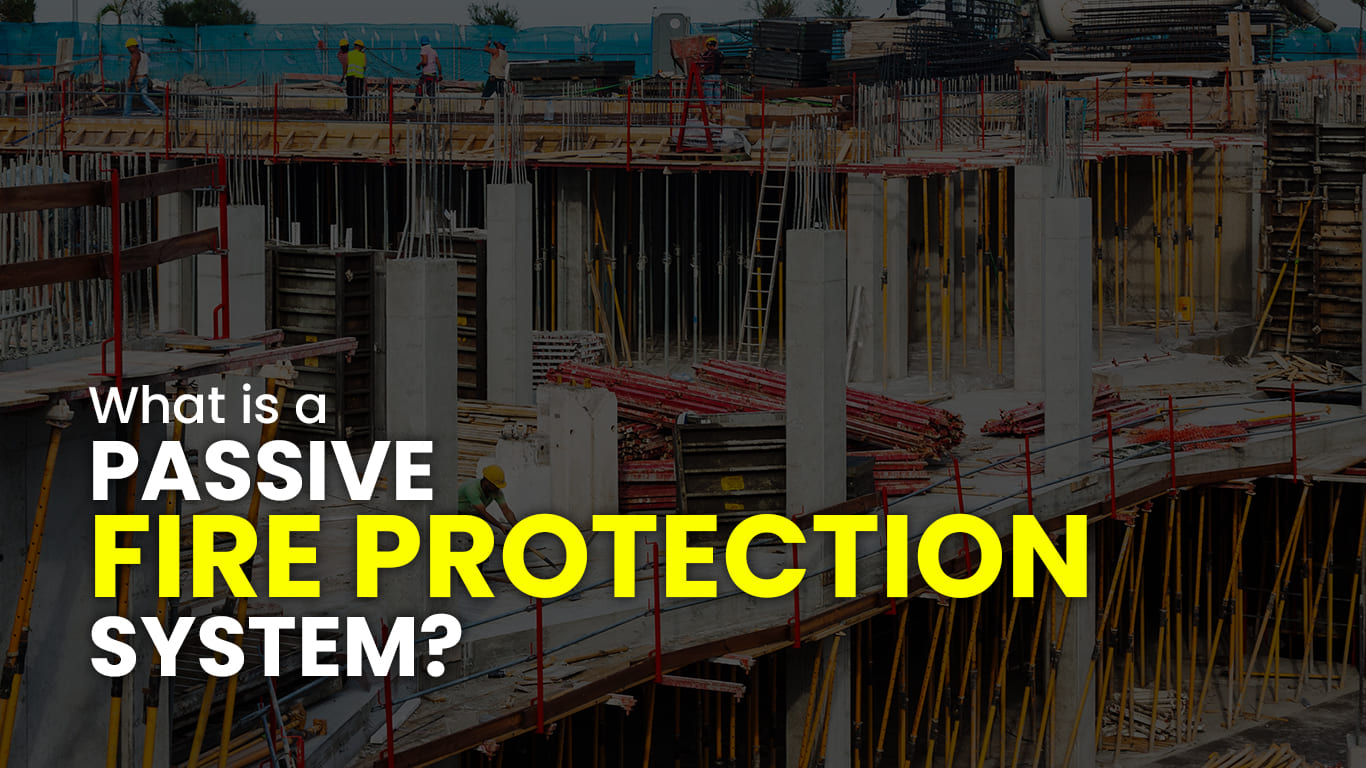
PFP plays a crucial role in stopping the fire and smoke from spreading further. So it reduces severity, safeguards people and minimizes damage to the buildings and their contents. The aim of installing a passive fire protection component is twofold. Firstly, to make buildings safe for the evacuation process. Secondly, by preventing the fire from turning into a serious threat. PFP components are usually installed during building construction. This allows a building to be divided into fire compartments.
Passive fire products are made to pass through rigorous testing under extreme fires.
Components of the Passive Fire Protection System
Just like it’s important to know what is passive fire protection, in the same manner, it’s important to know about its components it.
1. Compartmentation
Compartmentation divides the building into small sections to stop fire and smoke from spreading.
It includes:
- Firewalls & Fire Barriers
- Fire Partitions
- Smoke Barriers
- Fire-rated floors & ceilings
These barriers limit horizontal and vertical fire movement inside a building.
2. Opening Protection
Openings in fire barriers must also be protected.
This includes:
- Fire Doors (30, 60, 90, 120-minute rating)
- Fire-rated Windows & Glass
- Fire Dampers & Smoke Dampers placed inside duct openings
They block fire and smoke from entering escape routes or compartments.
3. Structural Fire Protection
This protects the critical structure of a building—such as beams, columns, and steel frames.
Common materials include:
- Intumescent Coatings
- Cementitious Fireproofing
- Gypsum Boards
- Fire-resistant Cladding
These materials prevent structural collapse during high temperatures.
4. Fire Stopping Systems
Fire stopping ensures that gaps, joints, and service penetrations (cables, pipes) are sealed using:
- Fire-resistant sealants
- Fire collars
- Fire wraps
- Mortars
This prevents smoke and fire leakage between compartments.
Benefits of Passive Fire Protection
Well, PFP is a crucial component of a fire safety strategy. So buildings, be it a high-rise or a low-rise should implement a PFP system.
The benefits of using passive fire protection are as follows:
- Limits the financial damage caused by fire
- Save lives
- Give time for building evacuation
For complete fire protection, proper installation and use of active and passive structural systems are important. It would not only reduce the impact of fire but even save lives.
Frequently Asked Questions (FAQs)
1. What is passive fire protection (PFP)?
Passive Fire Protection (PFP) refers to built-in fire safety measures that help slow down the spread of fire and smoke without requiring any activation. These systems work automatically as part of the building structure, providing critical time for occupants to evacuate and for emergency services to respond.
2. What is an active fire protection system?
An active fire protection system includes fire safety components that require action or activation to control or extinguish a fire. These systems usually respond when a fire is detected and include mechanical or electrical operation.
3. What is an example of a passive fire protection system?
Common examples of passive fire protection systems include fire-resistant walls, fire doors, fire-rated floors, fire-stopping seals around cables and pipes, and fireproof coatings on structural steel.
4. What is the difference between active and passive fire protection?
Active fire protection systems actively respond to a fire through detection, alarms, or suppression, while passive fire protection systems are always in place and work by containing fire and smoke. Active systems need power or manual operation, whereas passive systems do not.
5. What are the four types of fire protection systems?
The four main types of fire protection systems are:
- Passive Fire Protection
- Active Fire Protection
- Fire Detection and Alarm Systems
- Fire Suppression Systems
6. What is the best passive fire protection?
The best passive fire protection is a well-designed combination of fire-rated walls, floors, doors, and proper fire-stopping solutions. Effectiveness depends on correct material selection, professional installation, and compliance with fire safety standards.
7. What is the NFPA for passive fire protection?
The National Fire Protection Association (NFPA) provides guidelines and standards related to passive fire protection through codes such as NFPA 101 (Life Safety Code) and NFPA 5000 (Building Construction and Safety Code), which address fire resistance, compartmentation, and life safety requirements.