Direct vs. Indirect Pneumatic Tubing Systems for Electrical Panel Fire Suppression
- October 28, 2026
Key Highlights: Direct vs. Indirect Pneumatic Tubing Systems
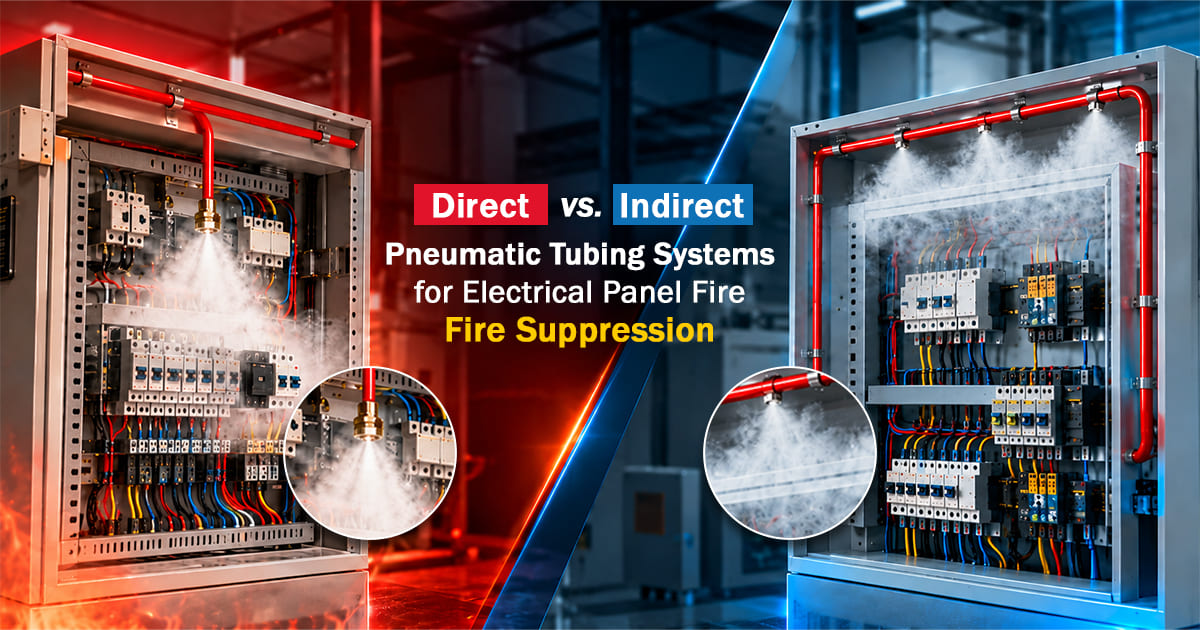
- The primary difference between direct and indirect pneumatic fire suppression systems is in how the suppression agent is delivered to an electrical panel fire.
- A direct fire suppression system detects and discharges through the same tube, making it ideal for compact, one-zone electrical panels.
- An indirect system uses a separate nozzle network triggered by the detection tube. Better for large cabinets and rooms with many panels.
- Both systems are self-acting and need no external power, so they work even during a complete electrical failure.
- The detection tube bursts at 110°C in normal setups, or 150°C and above in high-heat sites.
- Once the tube ruptures, systems can activate and discharge within seconds.
Why Electrical Panels Need Automatic Fire Suppression
Common Electrical Panel Fire Risks
A loose connection, a hot busbar or a breakdown in wiring insulation can start a fire before anyone even realises something is wrong. The common triggers are:
- Arcing faults from loose joints or corroded terminals
- Overhead busbars running above rated load
- Wiring insulation breaking down over time
- Thermal runaway in MCC cabinets
Why Portable Fire Extinguishers May Not Be Enough?
A fire extinguisher is only as useful as the person holding it. In remote MCC rooms, empty substations, or panels running through the night with no one around, no one is there to use it. And a ceiling smoke detector picks up smoke only after the fire inside the cabinet is already a minute old.
What Is a Pneumatic Tubing Fire Suppression System?
It is a plastic tube routed inside the hazard, charged with nitrogen, and connected to a suppression-agent tank. In short, heat ruptures it, and the agent releases right at the source.
How Tube-Based Fire Suppression Systems Detect Fire?
This system has no sensors, wiring, or control panel. The tube itself is both the detector and the trigger, so the system keeps working even during a power failure.
Where Electrical Panel Fire Suppression Systems Are Used?
Any enclosed electrical hazard where you can’t reach the cabinet fast enough is a good fit. Common setups include:
- Motor control centres and switchgear rooms
- Transformer bays and genset cabinets
- CNC machine panels and server racks
- EV charging systems and UPS rooms
How Does a Direct Fire Suppression System Work?
Detection and Agent Discharge Through the Same Tube
In a direct fire suppression system, the plastic tube detects heat and releases the agent through the same rupture point, so it doesn’t need a separate valve or nozzle network.
Best Uses for Direct Fire Suppression Systems
Here are the best use cases of the direct fire suppression system:
- Electric cabinets and panels
- CNC and industrial machines
- Server racks and telecommunications enclosures
- Vehicles and engine bays
- Diesel generator sets
- Fume hoods and laboratory equipment
How Does an Indirect Fire Suppression System Work?
Detection Tubing With Separate Agent Discharge Nozzles
The polymer tube detects the fire. When it ruptures, that pressure drop opens a valve and then the agent travels through fitted places across the cabinets.
Best Uses for Indirect Fire Suppression Systems
Here are the most suitable applications for indirect fire suppression systems:
- Large electrical cabinets and enclosures
- Server racks and telecom equipment
- CNC machines and industrial equipment
- Engine bay and vehicle compartments
- Power stations and unmanned facilities
Direct vs. Indirect Fire Suppression Systems: Key Differences
Both systems use the same detection tube. But they release the agent in completely different ways. And that difference determines which one is right for your cabinet. Here is a quick side-by-side comparison:
Which Fire Suppression System Is Best for Electrical Panels?
Because every project and application is different, no single system is best for every electrical panel. The right choice depends on panel size, internal layout, fire risk, ventilation, and the extinguishing agent type.
Compact Panel: Go with a Direct System
For a single-zone MCC, a compact switchgear cabinet or a small CNC control panel, a direct electric panel fire system is the best choice.
Large or Multi-Zone Cabinets: Go with an Indirect System
For large switchgear rooms, multi-bay MCCs or any cabinet where one discharge point will not cover all sections, an indirect fire suppression system for electrical panels gives you the nozzle coverage you need.
FAQs: Direct & Indirect Pneumatic Tubing System
What Is the Difference Between Direct and Indirect Fire Suppression Systems?
In a direct fire suppression system, the same heat-sensitive tube detects and extinguishes the fire. When the tube ruptures from heat or flames, the fire-extinguishing agent discharges directly from the rupture point onto the fire.
Can a Pneumatic Tubing Fire Suppression System Work During a Power Failure?
Yes, and that is exactly why facility teams prefer these. The tube runs on nitrogen pressure. It does not require external electricity, a control panel, or electronic detectors to detect and activate.
Can an automatic fire suppression system replace fire extinguishers for electrical fires?
No. An automatic suppression system protects a specific panel or enclosure, while portable extinguishers help with larger emergencies and smaller fires elsewhere. You should use both to ensure comprehensive fire safety and regulatory compliance.
Protect high-risk electrical panels with the right fire suppression system
Opt for direct suppression for small, localised panels and indirect suppression for large or complex cabinets. Have a qualified professional assess enclosure size, airflow, suppression agent type, and local regulatory requirements.