AC Fire Safety: Why Air Conditioners Catch Fire and How to Prevent It
- July 30, 2026
Air conditioners are running almost 24 hours a day across Indian homes, offices, and facilities. And most people never think about them as a fire risk.
They should. Faulty ACs are one of the leading causes of electrical fires in residential and commercial buildings. Here is what causes them, what to watch for, and how to stop a fire before it starts.
Common Causes of Air Conditioner Fires
Most AC fires do not start without warning. They build up over time.
Electrical faults are the biggest cause. For example: loose wiring, worn-out capacitors, and short circuits inside the unit generate heat that can ignite surrounding material without any visible warning.
Dust and dirt buildup is the second problem. Filters and coils clogged with dust force the motor to work harder. That extra load generates heat. Over months and years, that heat becomes a fire risk.
Overloading the circuit is common in older buildings. Running a high-capacity AC on an undersized electrical circuit causes wiring to overheat. This is a frequent cause of AC fires in Indian homes with aging infrastructure.
Poor installation and skipped servicing multiply every risk above. An incorrectly installed unit with unchecked wiring that never gets serviced is a fire waiting to happen.
Warning Signs That Should Never Be Ignored
These are the signals most people ignore until it is too late.
- Burning smell from the AC unit or vents, even briefly
- Sparks or visible discoloration around the plug or power board
- Circuit breaker tripping repeatedly when the AC is running
- The unit running hotter than usual or shutting off unexpectedly
- Unusual sounds like buzzing or crackling from inside the unit
How to Prevent Fire in AC
AC fire safety is mostly about consistent habits.
Service the unit every six months. A qualified technician cleans the coils, checks wiring connections, tests the capacitor, and catches problems.
Clean or replace filters monthly. This one step reduces motor strain and cuts fire risk significantly.
Use a dedicated electrical circuit. Never run an AC on a shared or overloaded power line.
Install a stabilizer. Voltage fluctuations are common across India and directly damage AC components.
Switch off when not in use for long periods. This is especially important during travel or extended absences.
What to Do If an AC Fire Starts
- Act fast. The first 30 seconds matter most.
- Switch off the main power supply immediately if it is safe to reach.
- Do not use water on an electrical fire.
- Move everyone out of the room. Keep the door closed to slow the spread of fire and smoke.
- Call emergency services right away.
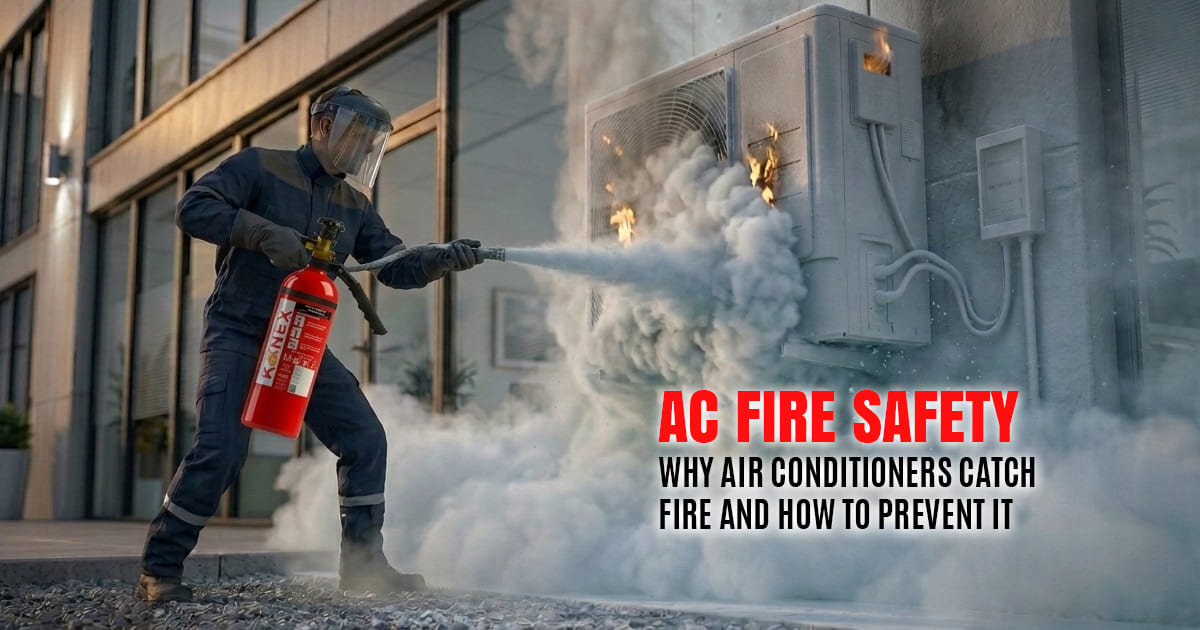
- If the fire is small and contained, use the right extinguisher.
Which Fire Safety Equipment to Use for AC Fire
An AC fire is an electrical fire. That changes everything about which equipment you reach for.
CO2 Fire Extinguishers are the first choice for electrical and AC fires. Kanex Fire CO2 extinguishers are BIS-certified and available in multiple capacities for homes, server rooms, and facilities.
ABC Fire Extinguishers are the versatile option. They handle Class A (solid materials), Class B (flammable liquids), and Class C (electrical fires) in one unit. For homes and offices where a single extinguisher needs to cover multiple risk types, Kanex ABC Fire Extinguishers are the best choice.
Fire Suppression Systems are the right answer for commercial facilities, data centres, and buildings where an AC fire could escalate quickly. Kanex Pre-engineered fire suppression systems activate automatically at the point of fire.
Conclusion
An AC fire does not give you much time. Kanex Fire has the right equipment for every risk level, from ABC and CO2 fire extinguishers to automated fire suppression systems. Contact Kanex Fire for more details.
Contact our experts today!
📞 +91 22 2500 1288
📧 marketing@kanexfire.com