Why LPCB Certification Matters in Fire Suppression Systems: A Complete Guide for Businesses
- July 27, 2026
Introduction
Protecting critical assets from fire is about more than just installing a fire suppression system. It’s about choosing a solution that has been independently tested, certified, and proven to perform when it matters most. Today, businesses across industries are looking for fire protection systems that not only safeguard their assets but also meet global safety standards and support insurance and compliance requirements.
This is where LPCB-certified fire suppression systems stand apart.
In this blog, we’ll explain what LPCB certification means, why it matters, and how it helps businesses improve fire safety while meeting global compliance requirements.
What is LPCB Certification?
LPCB (Loss Prevention Certification Board) is one of the world’s leading third-party certification bodies for fire and security products. Operated by BRE Global, United Kingdom, LPCB certification confirms that a product has been independently tested and regularly audited to meet internationally accepted performance standards.
Unlike products that rely only on manufacturer claims, an LPCB-certified system undergoes a very strict and detailed check before it is approved for use.
For businesses, this means greater confidence that the Fire suppression system will perform reliably when it is needed the most.
Understanding the FK-5-1-12 Direct Low Pressure Fire Suppression System
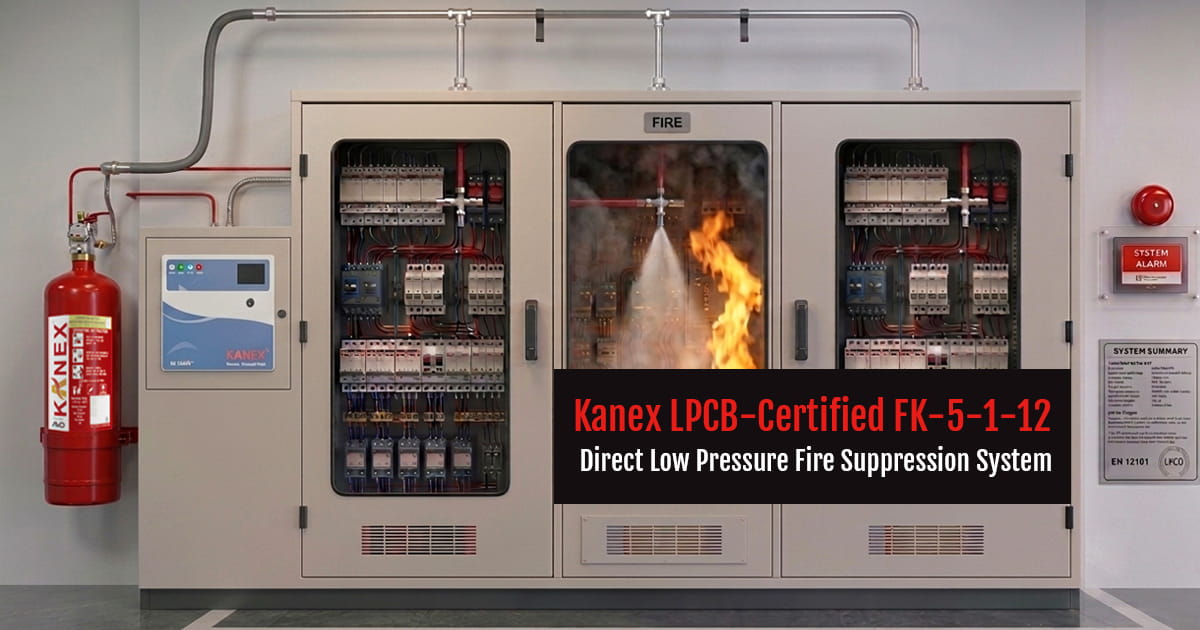
The FK-5-1-12 Direct Low Pressure (DLP) Fire Suppression System is a pre-engineered clean agent fire suppression solution designed to protect electrical and electronic equipment without leaving any residue after discharge.
It is widely used for protecting:
- Electrical control panels
- Server racks and data centres
- Automation cabinets
- CNC machines
- Battery energy storage systems
- Telecommunication equipment
- Mission-critical electrical assets
Since these applications contain valuable equipment and continuous operations, they require a suppression system that acts quickly while minimizing damage to sensitive electronics.
Why Third-Party Certification Matters
Many fire suppression systems available in the market look similar in design. However, not every system is independently verified.
Third-party certification provides confidence that the complete fire suppression system has been tested for performance, reliability, and manufacturing consistency.
Instead of just trusting what manufacturers say, certified systems are put through independent testing against recognized global standards. Factories are also inspected regularly, so quality isn’t a one-time check – it’s confirmed on an ongoing basis.
This gives consultants, safety professionals, and end users greater assurance in the system’s long-term performance.
What should choose LPCB Certified Fire Suppression System?
1. Proven Performance Through Independent Testing
An LPCB-certified system undergoes comprehensive testing before receiving approval.
These evaluations include:
- Full-scale fire performance testing
- Functional reliability testing
- Environmental and endurance testing
- Material compatibility assessment
- Manufacturing quality verification
- Periodic factory surveillance audits
These tests ensure that every production system performs consistently – not just the sample that was originally submitted for certification.
This level of validation helps reduce uncertainty during real emergency situations.
2. Designed According to International Engineering Standards
Fire suppression systems must be engineered with precision.
The Kanex FK-5-1-12 Direct Low Pressure Fire Suppression System has been designed in accordance with internationally recognized engineering frameworks, including:
- NFPA 2001 (2025 Edition)
- LPS 1666 Certification Framework
These standards define important design parameters such as:
- Correct extinguishing agent quantity
- Tube routing limitations
- Activation pressure
- Discharge characteristics
- Enclosure volume calculations
- System operating limitations
Following validated engineering principles helps ensure predictable and repeatable performance across different installations.
3. Supporting Insurance, Audits, and Regulatory Compliance
Today’s businesses are expected to meet increasingly stringent fire safety requirements.
Many insurance companies, industrial customers, OEMs, and corporate safety policies prefer—or even require—third-party certified fire suppression systems.
Using a certified system can help organizations:
- Support insurance documentation
- Meet fire safety audit expectations
- Simplify regulatory compliance
- Strengthen risk management practices
- Improve confidence during project approvals
For consultants and facility managers, choosing certified equipment often reduces compliance-related concerns later in the project lifecycle.
LPCB-Certified vs Non-Certified Fire Suppression Systems
| LPCB-Certified System | Non-Certified System |
| Independently tested and verified | Performance based primarily on manufacturer claims |
| Regular factory audits | No independent production surveillance |
| Designed using validated engineering standards | Design may vary between installations |
| Better support for audits and compliance | May require additional technical justification |
| Consistent manufacturing quality | Product consistency may vary |
While both systems may appear similar externally, independent certification offers an additional level of assurance for critical applications.
Where LPCB-Certified Systems Are Most Suitable
Certified fire suppression systems are particularly valuable where uninterrupted operations and asset protection are essential.
Typical applications include:
- Electrical control panels
- Data centres
- Server rooms
- Industrial automation systems
- Manufacturing plants
- Pharmaceutical facilities
- Hospitals
- Banks and financial institutions
- Telecommunication infrastructure
- Battery storage systems
These environments demand reliable fire protection with minimal disruption to operations.
Kanex Fire’s LPCB-Certified FK-5-1-12 Direct Low Pressure Fire Suppression System
Kanex Fire Solutions has achieved LPCB Certification (LPS 1666) for its FK-5-1-12 Direct Low Pressure Fire Suppression System, reinforcing its commitment to delivering globally compliant fire protection solutions.
LPCB Certificate Number: 1883a
The certification is maintained through periodic surveillance and annual factory audits conducted by BRE Global, United Kingdom, ensuring continued manufacturing consistency and product quality.
The system offers:
- LPCB-certified performance
- Clean agent technology with no residue after discharge
- Compliance-oriented engineering
- Reliable protection for electrical and mission-critical assets
- Suitable for modern industrial and commercial applications
Conclusion
Selecting a fire suppression system is more than choosing a product – it is about protecting people, valuable equipment, and business continuity.
An LPCB-certified fire suppression system provides confidence that the solution has been independently tested, engineered to recognized standards, and manufactured under controlled quality processes.
For organizations that prioritize safety, compliance, and long-term reliability, certification is an investment in confidence—not just compliance.
Connect with Kanex Firefor an internationally certified fire suppression solution for your facility.
Our team can help you to choose the right system for different types of applications.
Contact our experts today!